Showing posts with label 1912 Little Falls textile strike. Show all posts

Saturday, March 21, 2020

Free downloads of historical novels inspired by Upstate New York history

In this time of the corona virus epidemic when so many of us are confined to our homes, I wanted to make available free downloads of the Kindle version of five my novels. They are all appropriate for high school students as well as adults. Relying on Amazon guidelines, the books below will be available at no charge  for five days each from now into the middle of April. Each is closely based on the historical record of figures from our local history who were maligned and misunderstood in their own times.

March 22 to March 26, 2020


Neither Rebel Nor Tory is the story of Hanyost Schuyler who grew up near Little Falls, NY among the Mohawks and who was regarded as "feeble minded" by his white neighbors. His affinity with Mohawk culture allowed him single-handedly to cause the British and their allies to break off the siege of Fort Stanwix in 1777. The novel also features a close look at the Battle of Oriskany and the role played by Hanyost's uncle, Nicholas Herkimer.


March 27 to March 31, 2020


The River That Flows Both Ways is the story of Harmen van den Bogaert, the first European to visit the Mohawk heartland in the 17th century. An explorer and surgeon, he played a central role in building the relationship between the first people and the Dutch settlers at Fort Orange, now Albany.
Later, his same-sex relationship with his African slave Tobias came to the attention of the Calvinist Dutch authorities and he fled to refuge among the Mohawks, only later to perish in another escape attempt. His story is told in the voice of Matouac, a Mohican boy taken as a servant by Bogaert.


April 1 to April 5, 2020


Roxy Druse and the Murders of Herkimer  County is based on a notorious murder case which attracted national attention in 1880s. Roxy Druse was convicted and hung at Herkimer for killing and dismembering her husband on an isolated farm in Jordanville, NY. Although branded as "a female fiend" by the press, this novel paints a more sympathetic picture of Roxy Druse, told in the voice of an actual journalist of the time, W.H. Tippett. The volume also includes Tippett's own history of the Druse and many other murders in Herkimer County.


April 7-11
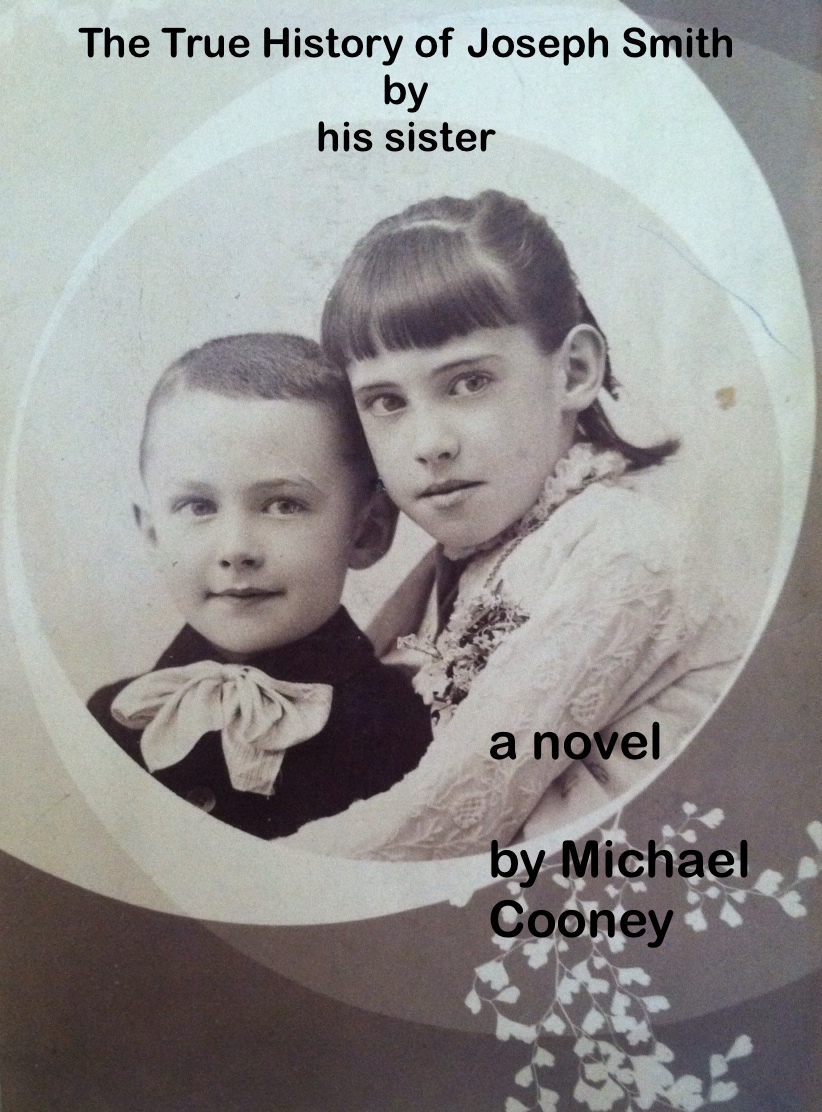


The True History of Joseph Smith is a re-telling of the life of the Mormon prophet through the eyes of his sister Sophronia. She is very devoted to him as a boy and, like the rest of the Smith family, is in awe of his cleverness. As he grows into adolescence, she learns to make excuses for each new act of fraud, or perhaps imagination, which he initiates. Although she tells her granddaughter, who is the audience for her narrative, that she completely believes all of her brother's stories about visions and angels and golden books, the very details she chooses lead to less generous interpretations.

Every character and incident is patterned closely on the historical record of the remarkable young man from Palmyra, New York.


April 12-16


The Red Nurse is a story of the 1912 textile strike in Little Falls, New York through the eyes of one of its leaders, the public health nurse M. Helen Schloss. The strike by the largely female workers burst out in response to wage cuts and soon drew in the leading radicals of the age. Mayor George Lunn of Schenectady led his socialists to support the women while Big Bill Haywood and Carlo Tresca came with the far more radical International Workers of the World. When the professional and male organizers were jailed, Helen Schloss and IWW organizer Matilda Rabinowitz led the strikers to an arbitrated vistory.

Tuesday, October 2, 2018

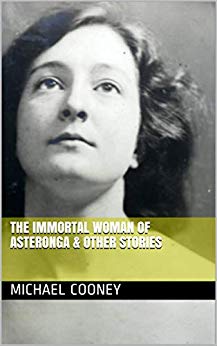
The Immortal Woman of Asteronga & other stories


A new collection of stories set in the mythical upstate New York village of Asteronga is now available at Amazon in digital and paper formats. The sixteen stories are inspired by history, legends and rumors of the Mohawk Valley from the 1830s to the present.

The title story "The Immortal Woman of Asteronga" is inspired by an eccentric lesbian who once held court in an old Model T on Mary Street in Little Falls. In the story she is befriended by a high school girl who is mystified by her knowledge of ancient peoples and languages.

"When the Saints Came to Asteronga" features the return of Judge Nathaniel Benton and attorney Arphaxad Loomis, last seen in the novela of the underground railroad, "Greater Love." In the present story, the two legal scholars take action when the father and brothers of Mormon prophet Joseph Smith bring their new gospel to the small Erie Canal town.

"Roxalana" is a variation on the story of the 1884 ax murderess of Jordanville explored in much more detail in Roxy Druse and the Murders of Herkimer County


"Factory Girl" is a variation on the story of the 1912 Little Falls textile strike  described more fully in The Red Nurse.

"Pursuit of Happiness" is a happier version of the 1914 school teacher murder in Poland, NY.

"The Colonel Takes Command" features the commander of the local Home Guard and combines elements of the Guard's infamous cattle slaughter at Camp Jolly and the manhunt for trunk murderer Mike Masco just before World War I.

"Bad Water" intersects with the cattle slaughter scene of the previous story but is primarily a study of a recovering alcoholic of a century ago.

"Battle at Indian Cave" features of gang of immigrant children who fight to save a disabled older boy from the 1917 military draft. Their hideout is in a forgotten cave not far from Overlook Mansion in Little Falls.

"The Colored Murderer" is a look at racial attitudes in an almost entirely white mill town and is inspired by an infamous domestic murder. Like other stories, this features the actual police and fire chiefs of Little Falls, New York.

"Sister Margaret Mary"is a look into the often desperate yet creative lives of the nuns who taught generations of Catholic children in Valley towns.

"Displaced Person" is about one of the many refugees who came from Europe in the aftermath of World War II, hiding terrible secrets about what they had seen and done.

"The Marxist of the Mohawk" is the tale of a couple whose love was destroyed by intrusive FBI agents dispatched to Asteronga by Senator Joseph McCarthy.

The Golden Stairway to Heaven tells what happens when a DJ at Asteronga's radio station sees a UFO.

Check It, 99 is about Joe Halsdap who gets out of the Army in 1972 and decides to drive a taxi in New York City, only to retreat to Asteronga after discovering his own capacity for violence

"The Osatoot" is the story of a young boy trying to cope with his father's death.

"The Dead Boy's Suit" is a dark comedy of success in the 1960s.


The first collection of  11 Asteronga stories, published in 2013, is also available on Amazon . Ranging from the tale of an undertaker's daughter with her own special cemetery to "Burying Uncle Artie" and "Gracie Was Never a Prostitute," the grimly humorous stories are unified around the experiences of a boy growing up in the mid -20th century Mohawk Valley. A newly reformatted and revised version of the collection is available.


Thursday, November 16, 2017

Matilda Rabinowitz memoir published by Cornell Press


Robbin Legere Henderson has published Immigrant Girl Radical Woman, the memoir of her grandmother Matilda Rabinowitz, who was a key leader of the 1912 Little Falls textile strike and an organizer in many other labor battles. The book is beautifully illustrated with Robbin's own sketches.

The book is available from Cornell University Press and following is the description from that site:

"Matilda Rabinowitz’s illustrated memoir challenges assumptions about the lives of early twentieth-century women. In Immigrant Girl, Radical Woman, Rabinowitz describes the ways in which she and her contemporaries rejected the intellectual and social restrictions imposed on women as they sought political and economic equality in the first half of the twentieth century. Rabinowitz devoted her labor and commitment to the notion that women should feel entitled to independence, equal rights, equal pay, and sexual and personal autonomy.

Rabinowitz (1887–1963) immigrated to the United States from Ukraine at the age of thirteen. Radicalized by her experience in sweatshops, she became an organizer for the Industrial Workers of the World from 1912 to 1917 before choosing single motherhood in 1918. "Big Bill" Haywood once wrote, "a book could be written about Matilda," but her memoir was intended as a private story for her grandchildren, Robbin Légère Henderson among them. Henderson’s black-and white-scratchboard drawings illustrate Rabinowitz’s life in the Pale of Settlement, the journey to America, political awakening and work as an organizer for the IWW, a turbulent romance, and her struggle to support herself and her child".


And here's an example of Robbin's illustrations in the book:

      Matilda at work


More on this site about Matilda Rabinowitz plus photos